
- EN
- DE

Bacteria
Gram-negative rods

- Organ System
- Respiratory Tract, Digestive Tract
- Diagnostic Method
- Cytology
- Geographical Region
- Dry Areas,
- Islands,
- Tropical and Subtropical Region,
- Polar and Subpolar Zone,
- Temperate Zone
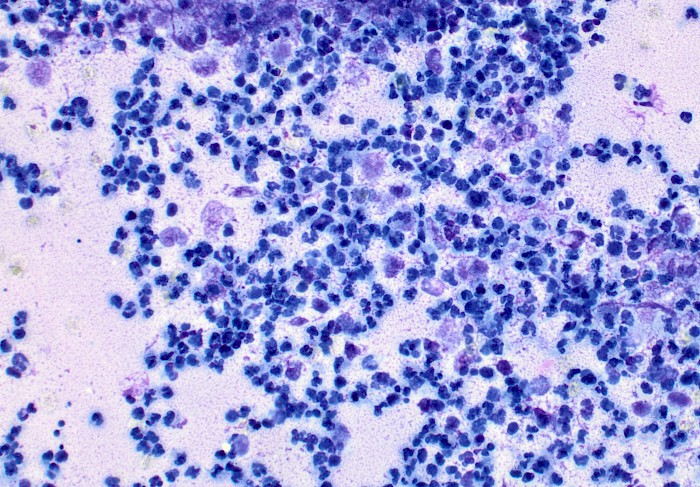
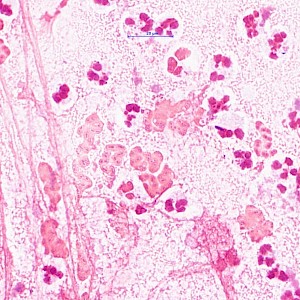
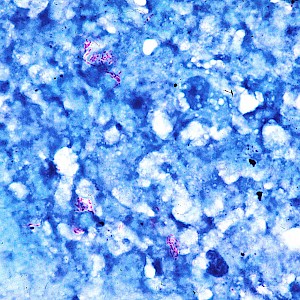
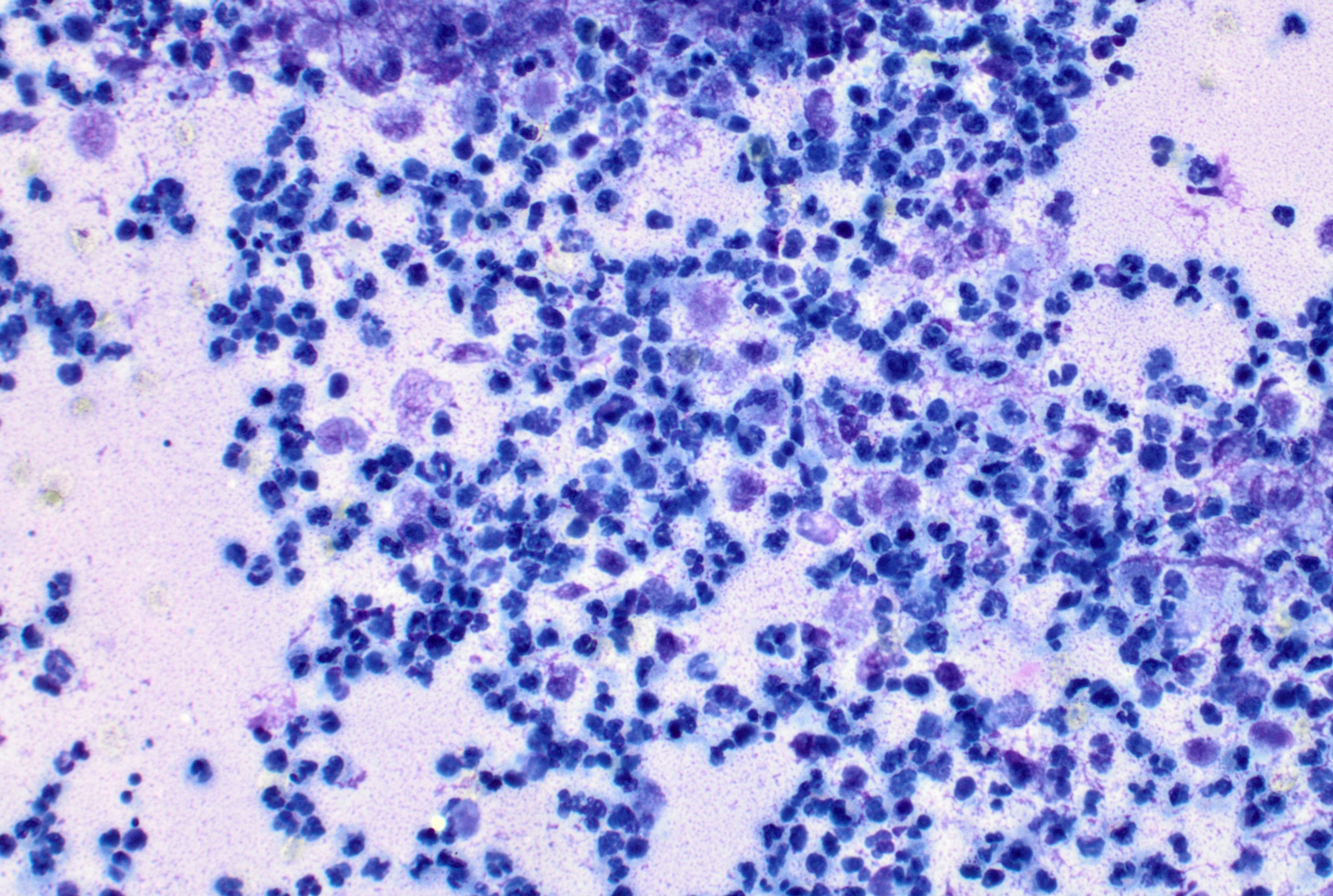 Liver abscess, numerous rod-shaped bacteria…
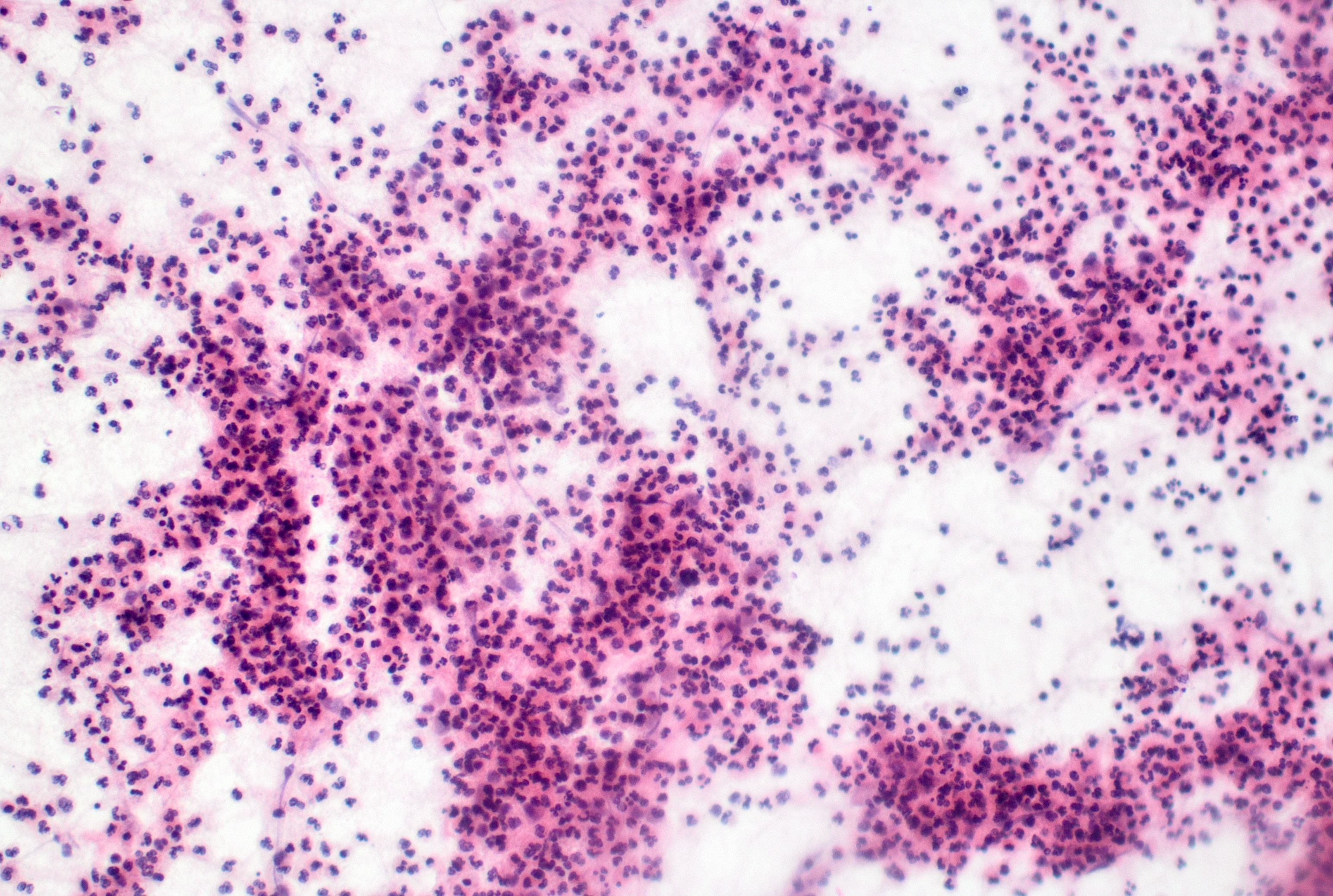 Liver abscess, neutrophil-rich inflammatory…
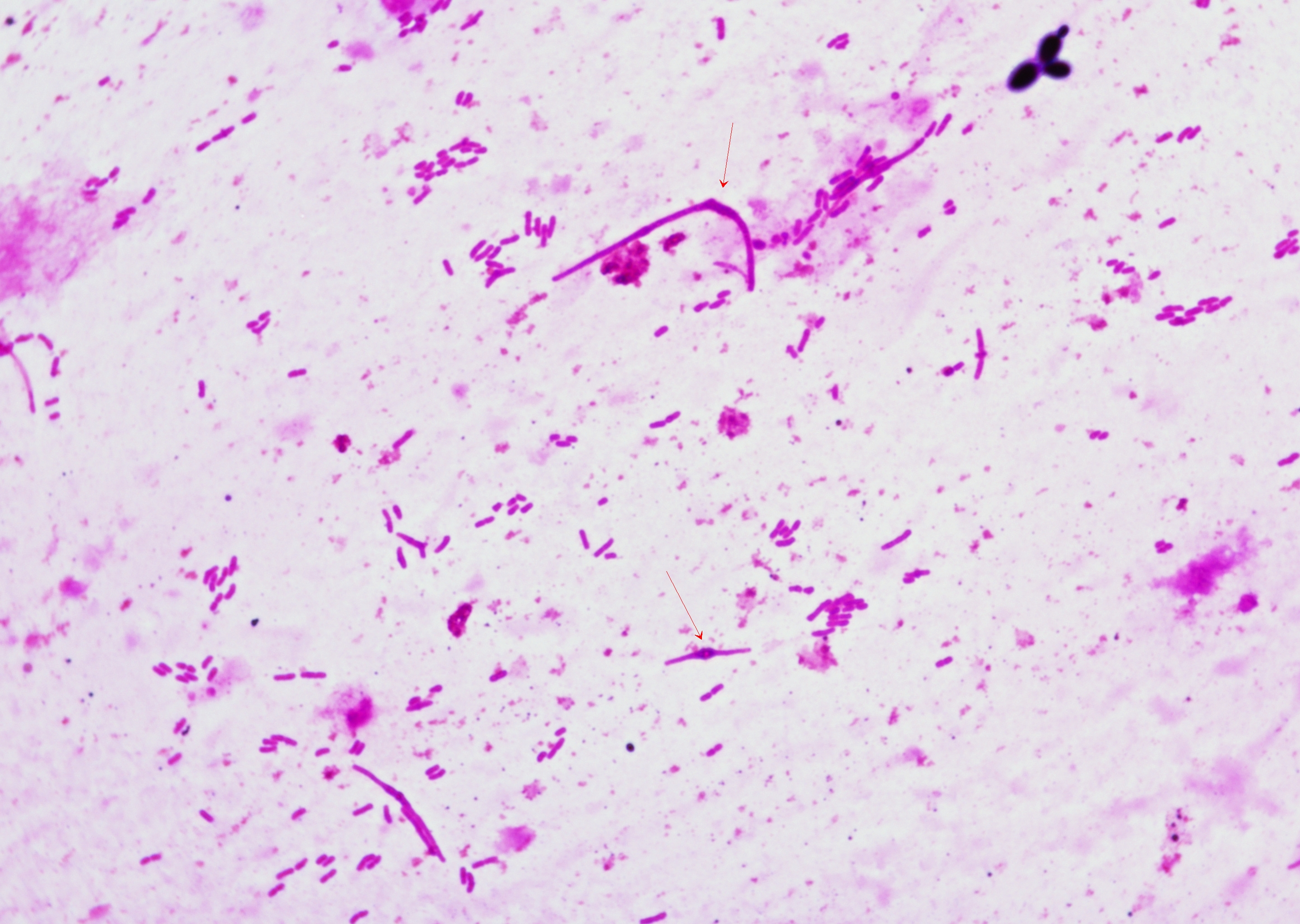 Sputum, patient under antibiotic therapy for…
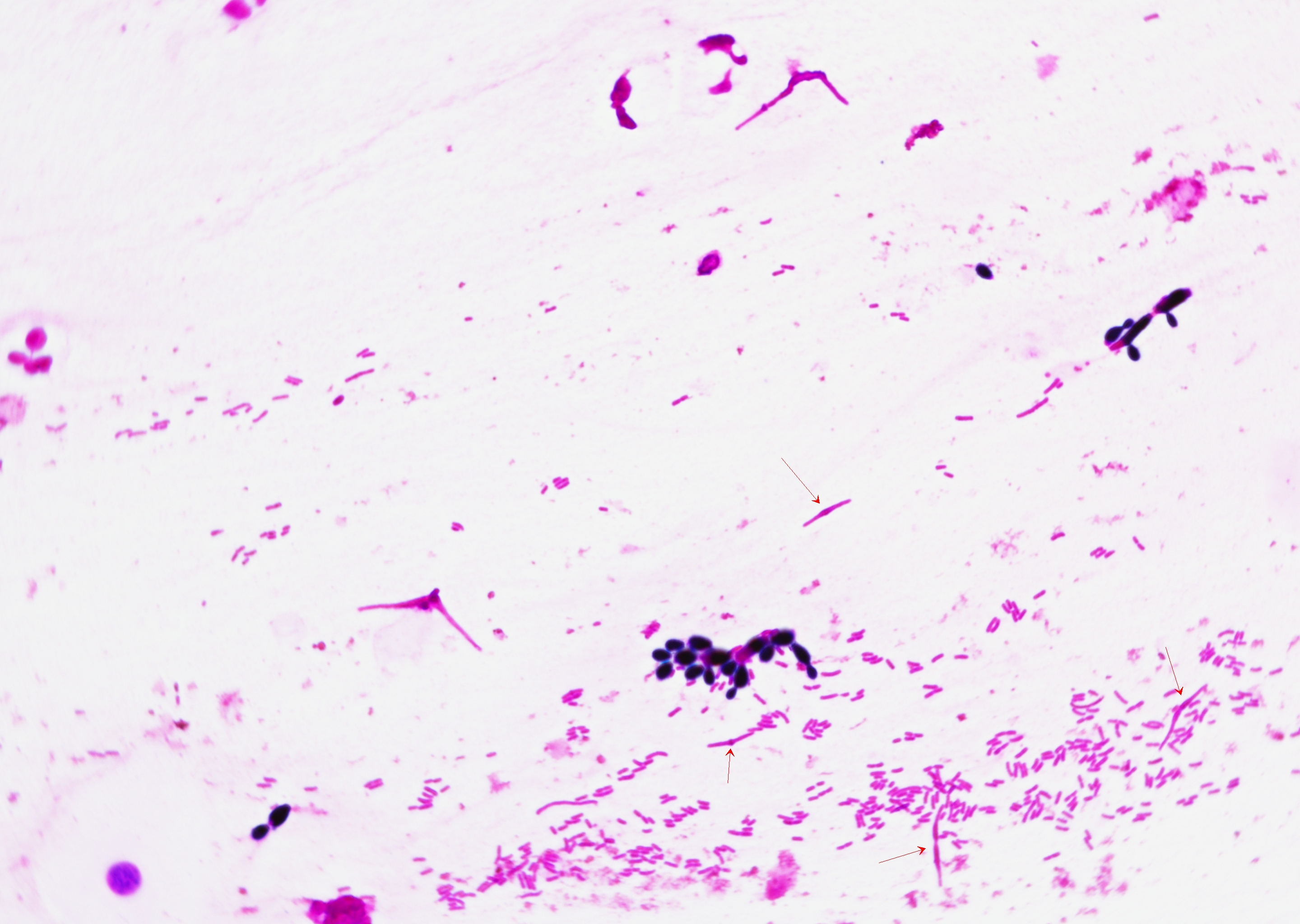 Sputum, patient under antibiotic therapy for…
Morphology
Cytology:
Slender to medium-width rods staining pink to red on Gram stain; singly, in pairs, or in loose aggregates, extracellular and/or within neutrophils. Direct smear morphology allows only a preliminary morphologic categorization and is not reliable for species-level identification; possible morphotype classification includes Enterobacterales (medium-width rods), Pseudomonas (slender, elongated rods; exception: mucoid variant), Haemophilus/Bacteroides (small coccobacilli), with overall accuracy ~76 %. (2)
Histology:
In tissue sections, bacterial rods may be inconspicuous on HE; tissue Gram stains can improve detection with low sensitivity but high specificity on FFPE sections; for skin sections ~43 % and ~98 % (3); a negative result does not exclude infection.
Clinical notes
Clinically important gram-negative bacilli especially in respiratory and urinary tract infections. In high-quality respiratory specimens, numerous and predominant gram-negative bacilli support the diagnosis of gram-negative pneumonia. In the urinary tract, Enterobacterales predominate, with most common Escherichia coli.
Klebsiella pneumoniae is the leading cause of pyogenic liver abscess in Asia and increasingly worldwide; hypervirulent strains (hvKp, serotypes K1/K2) can cause invasive disease in otherwise healthy individuals, often associated with diabetes mellitus. Metastatic complications include endophthalmitis (~5-7 %), meningitis, and septic pulmonary emboli (6).
See also: Klebsiella granulomatis / Granuloma inquinale (Donovanosis)
Ancillary Testing
Correlation with microbiology essential - culture, organism identification, MALDI-TOF MS, antimicrobial susceptibility testing; String test in Klebsiella spp., detection of virulence factors, if applicableAdditional Information
Interpretation should always take specimen quality and the inflammatory background into account. Bacteria associated with leukocytes support a host inflammatory response, but this finding alone does not prove true infection in every case. Mucoid variants are discussed separately.
Thicker FFPE sections (6 µm vs. 4 µm) may improve organism detection (4 [limited data, single small study]).
Differential Diagnosis
References
- Hata DJ, Thomson RB Jr. Gram Stain Benchtop Reference Guide. Northfield, IL: College of American Pathologists; 2022.
- Bartlett RC, Mazens-Sullivan MF, Lerer TJ. Differentiation of Enterobacteriaceae, Pseudomonas aeruginosa, and Bacteroides and Haemophilus species in gram-stained direct smears. Diagn Microbiol Infect Dis. 1991 May-Jun;14(3):195-201. doi: 10.1016/0732-8893(91)90032-b. PMID: 1716190.
- Stagg B, Foster-Smith E, Tam PCK. The diagnostic accuracy of Gram stain on formalin-fixed paraffin-embedded sections of skin tissue in the diagnosis of bacterial skin infection. J Cutan Pathol. 2024 Mar;51(3):246-250. doi: 10.1111/cup.14563. Epub 2023 Nov 23. PMID: 37997440.
- Sangoi AR. "Thick Section" Gram Stain Yields Improved Detection of Organisms in Tissue Sections of Cystic Neutrophilic Granulomatous Mastitis. Am J Clin Pathol. 2020 Apr 15;153(5):593-597. doi: 10.1093/ajcp/aqz200. PMID: 31830244.
- Miller, J. M., Binnicker, M. J., Campbell, S., et al. (2024). Guide to utilization of the microbiology laboratory for diagnosis of infectious diseases: 2024 update by the IDSA and ASM. Clinical Infectious Diseases, ciae104. https://doi.org/10.1093/cid/ciae104