
- EN
- DE

Parasites
Trichomonas vaginalis

- Organ System
- Genitourinary Tract
- Diagnostic Method
- Cytology, Histology
- Geographical Region
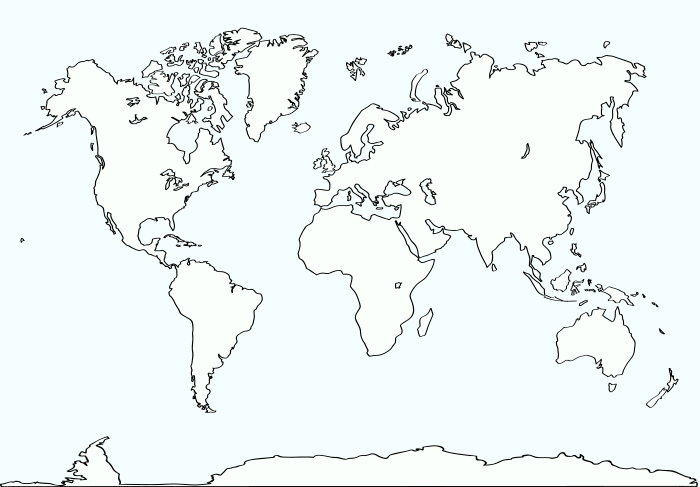
- Dry Areas,
- Islands,
- Tropical and Subtropical Region,
- Temperate Zone
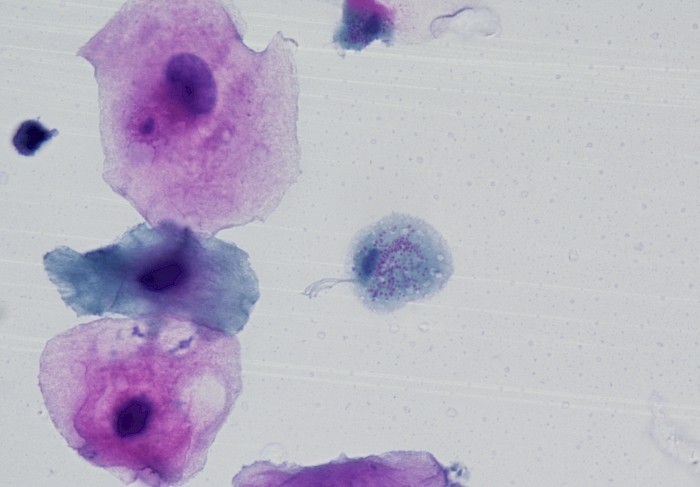
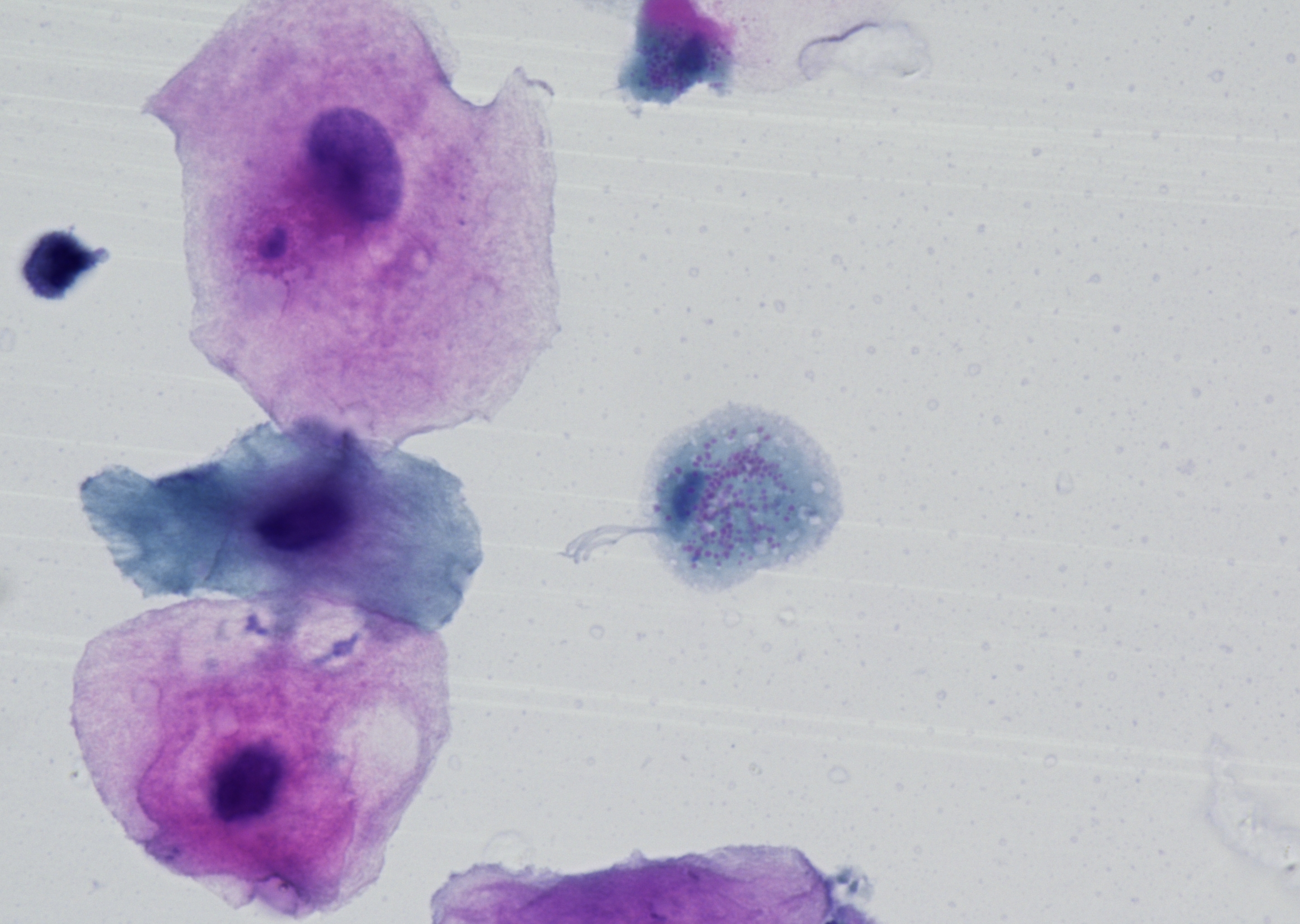 LBC: Oval, single-celled organism with…
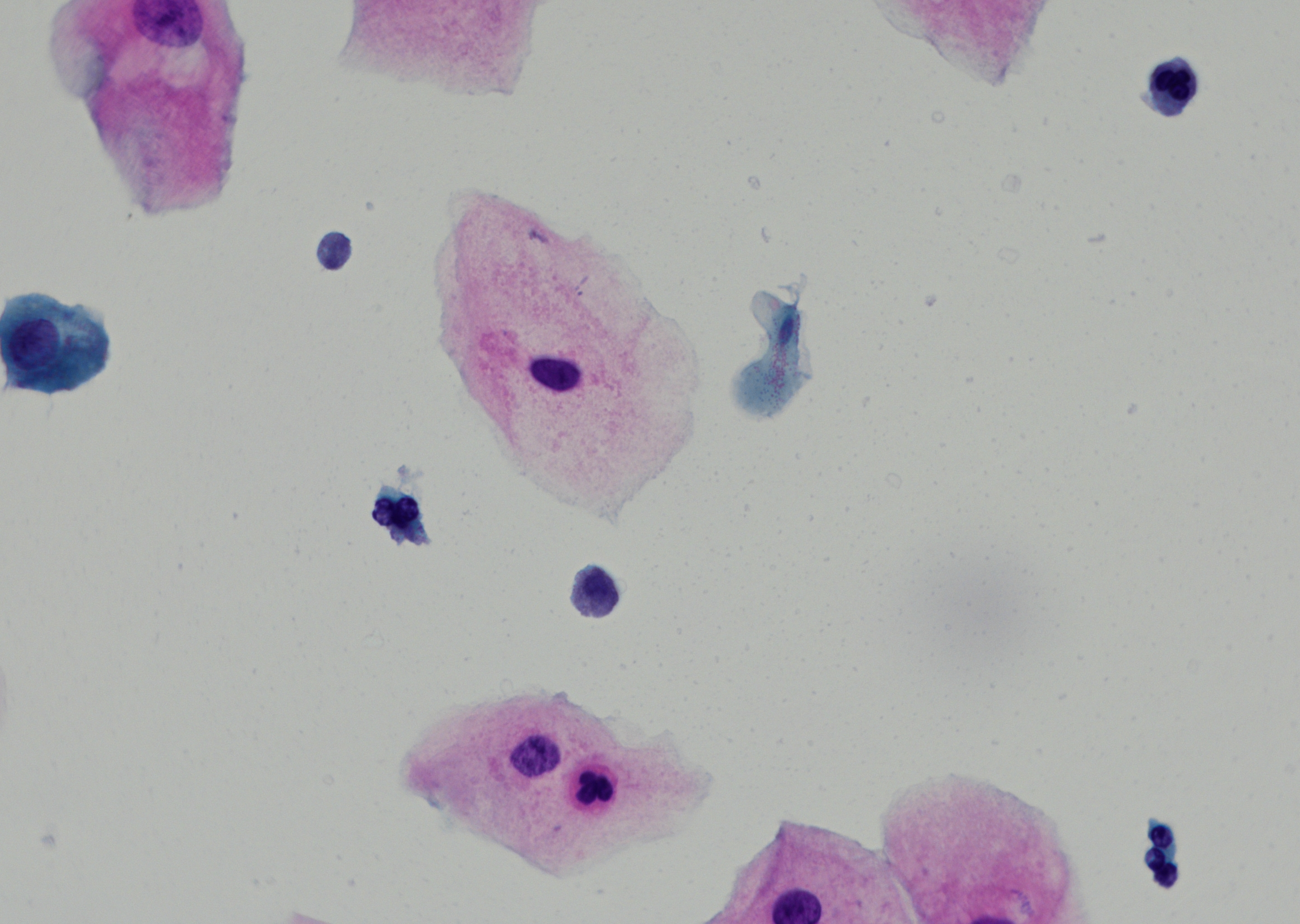 LBC: Trichomonads are usually much smaller…
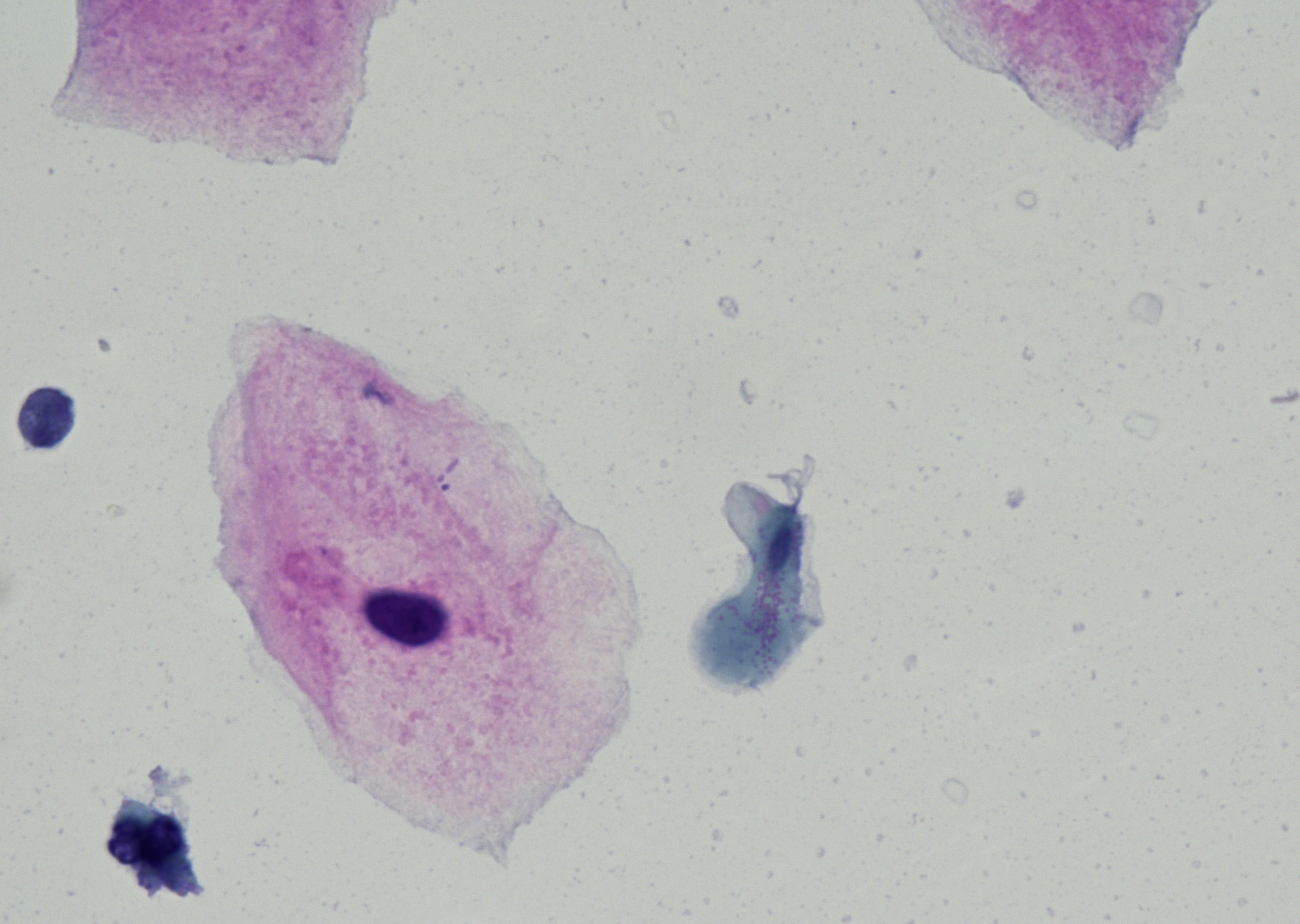 LBC: Pear-shaped trophozoite with an…
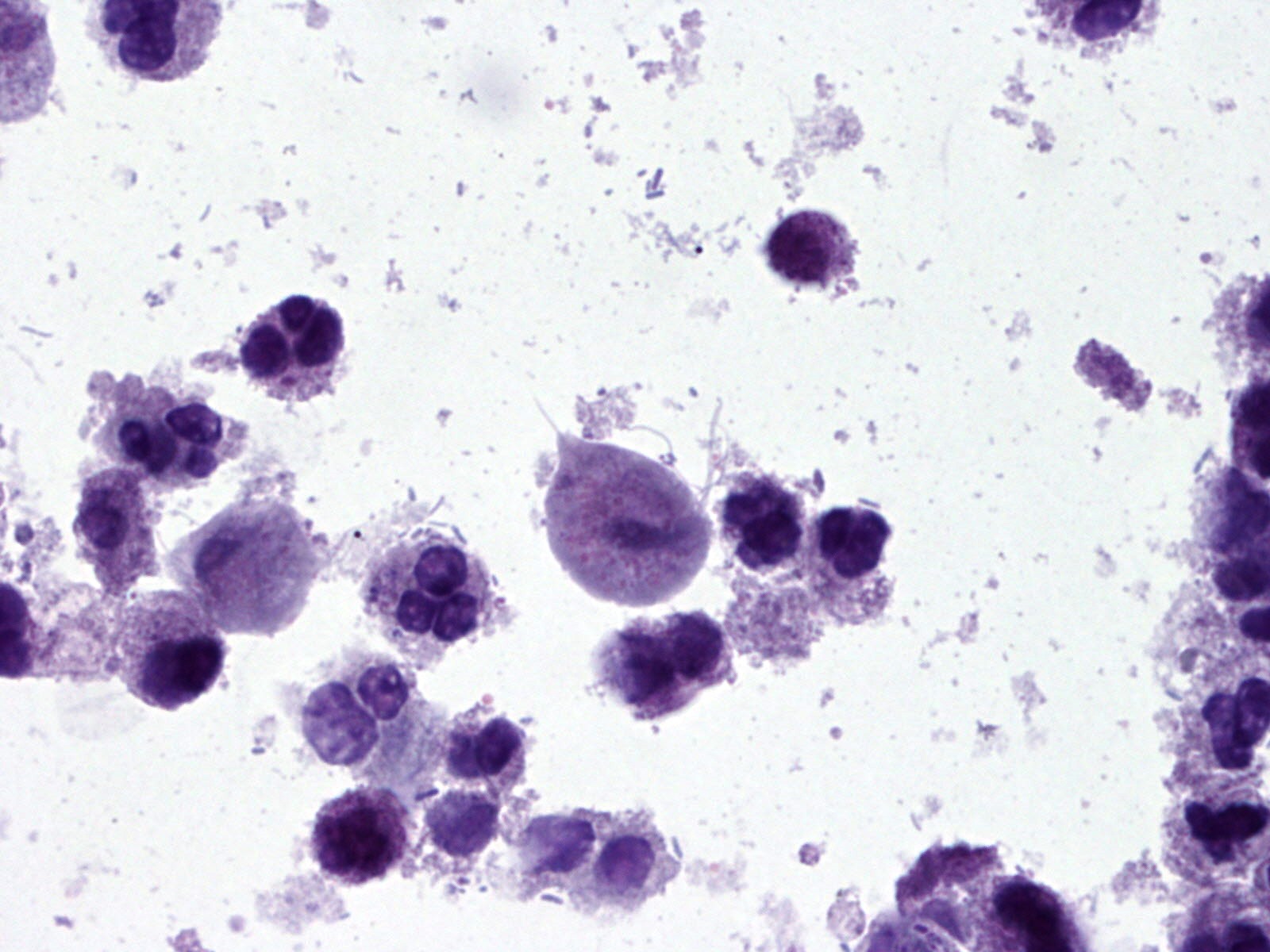 LBC: Oval trophozoite with flagella and…
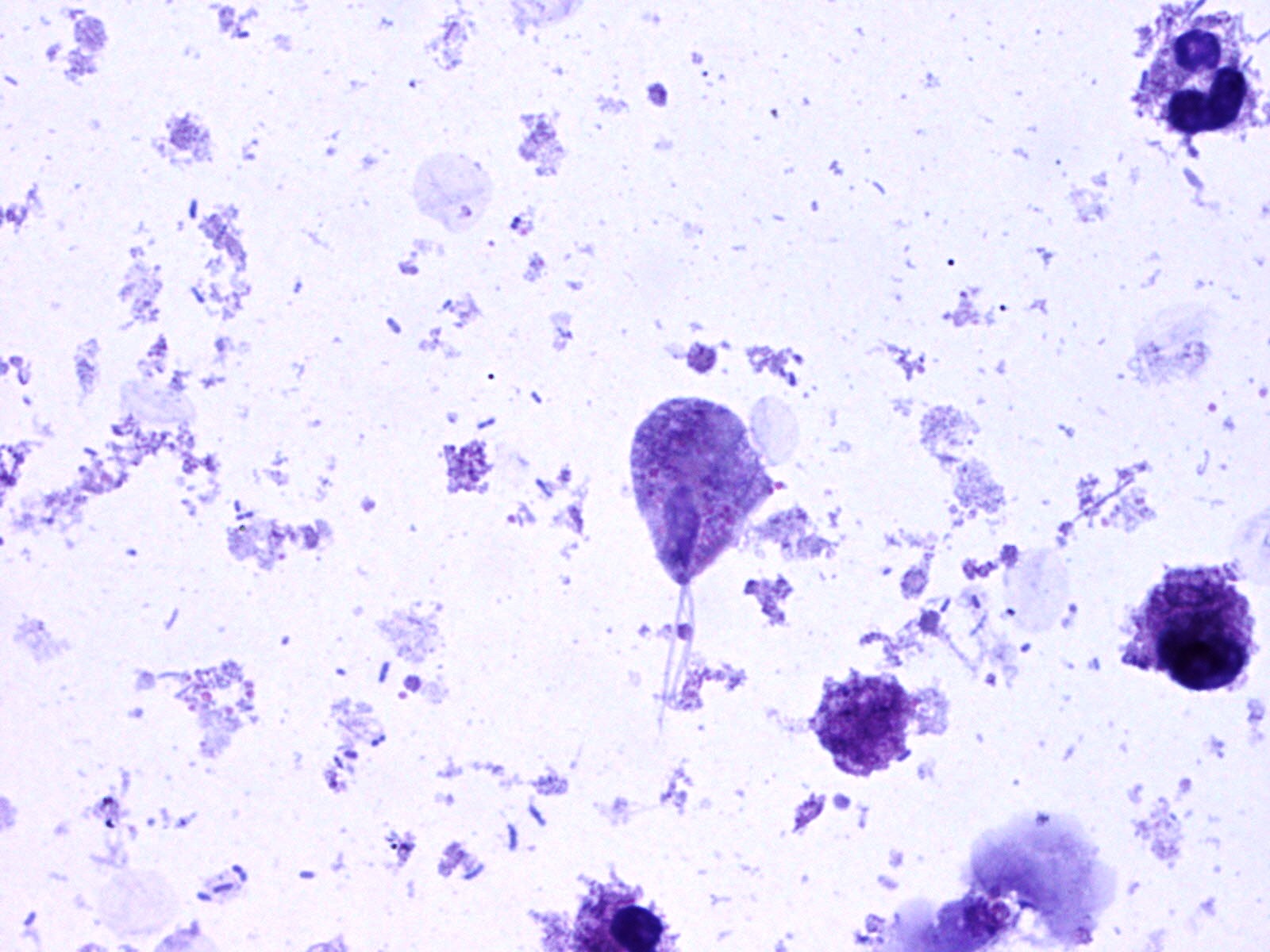 LBC: Trichomonad showing characteristic…
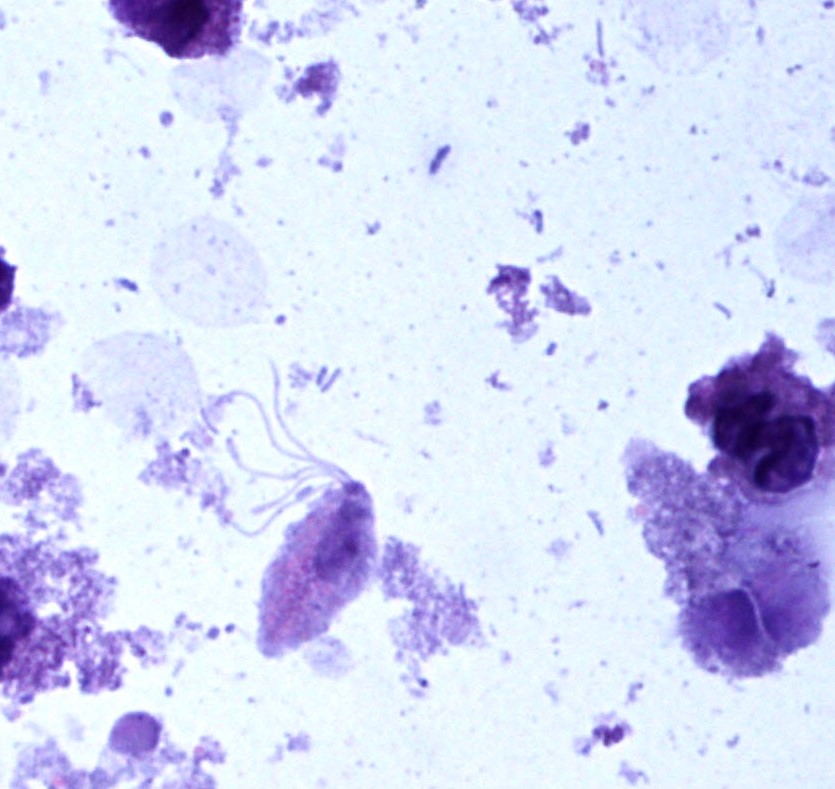 LBC: Trichomonad with a faintly visible…
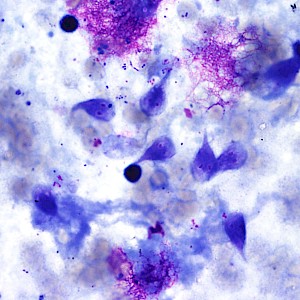
 Trichomonad trophozoites with Leptothrix…
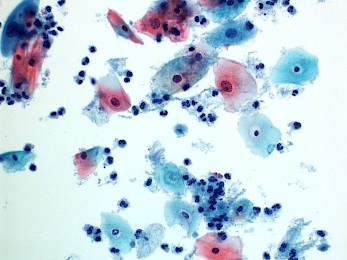 LBC: Typical inflammatory background rich in…
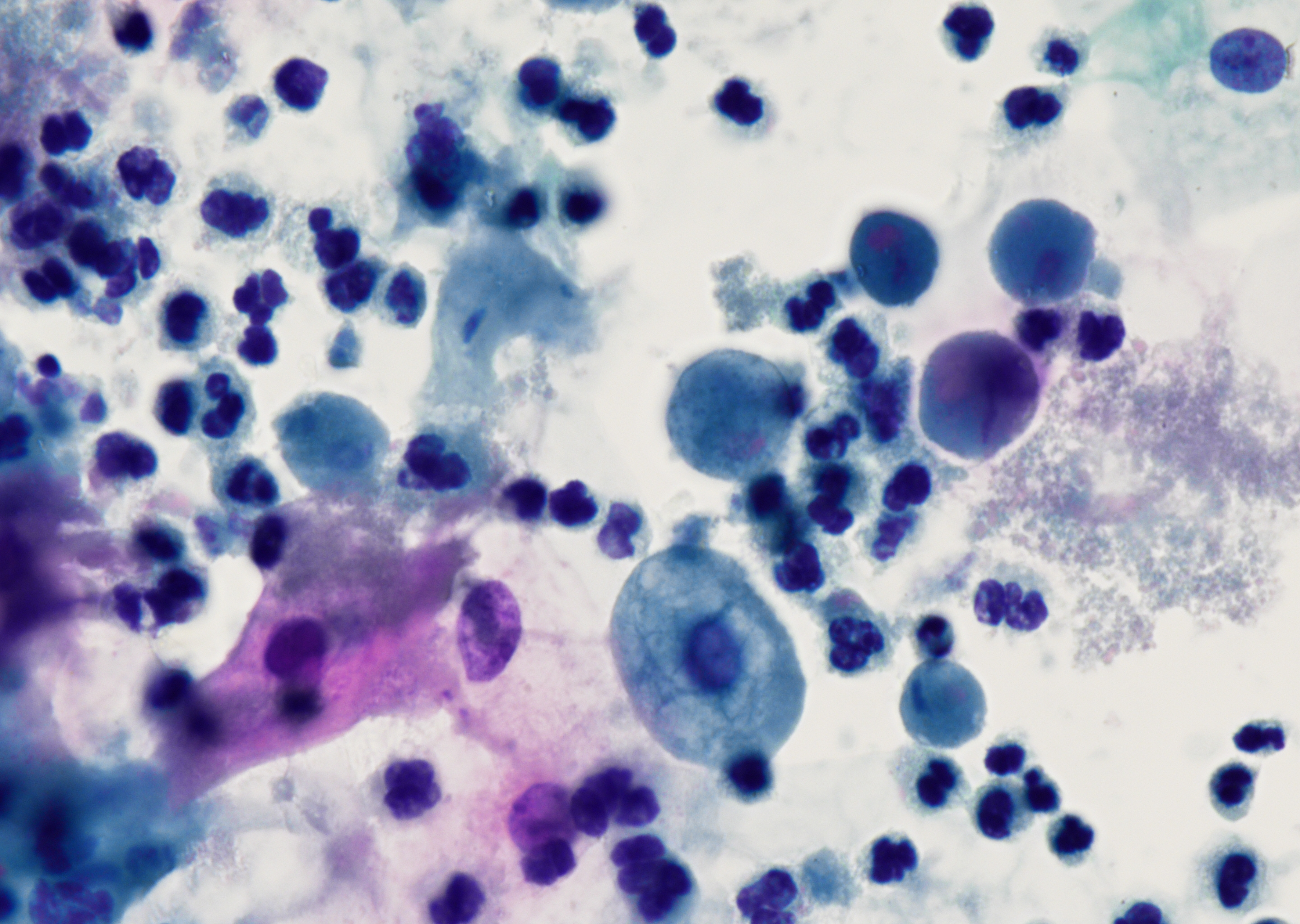 Voided urine with neutrophilic granulocytes…
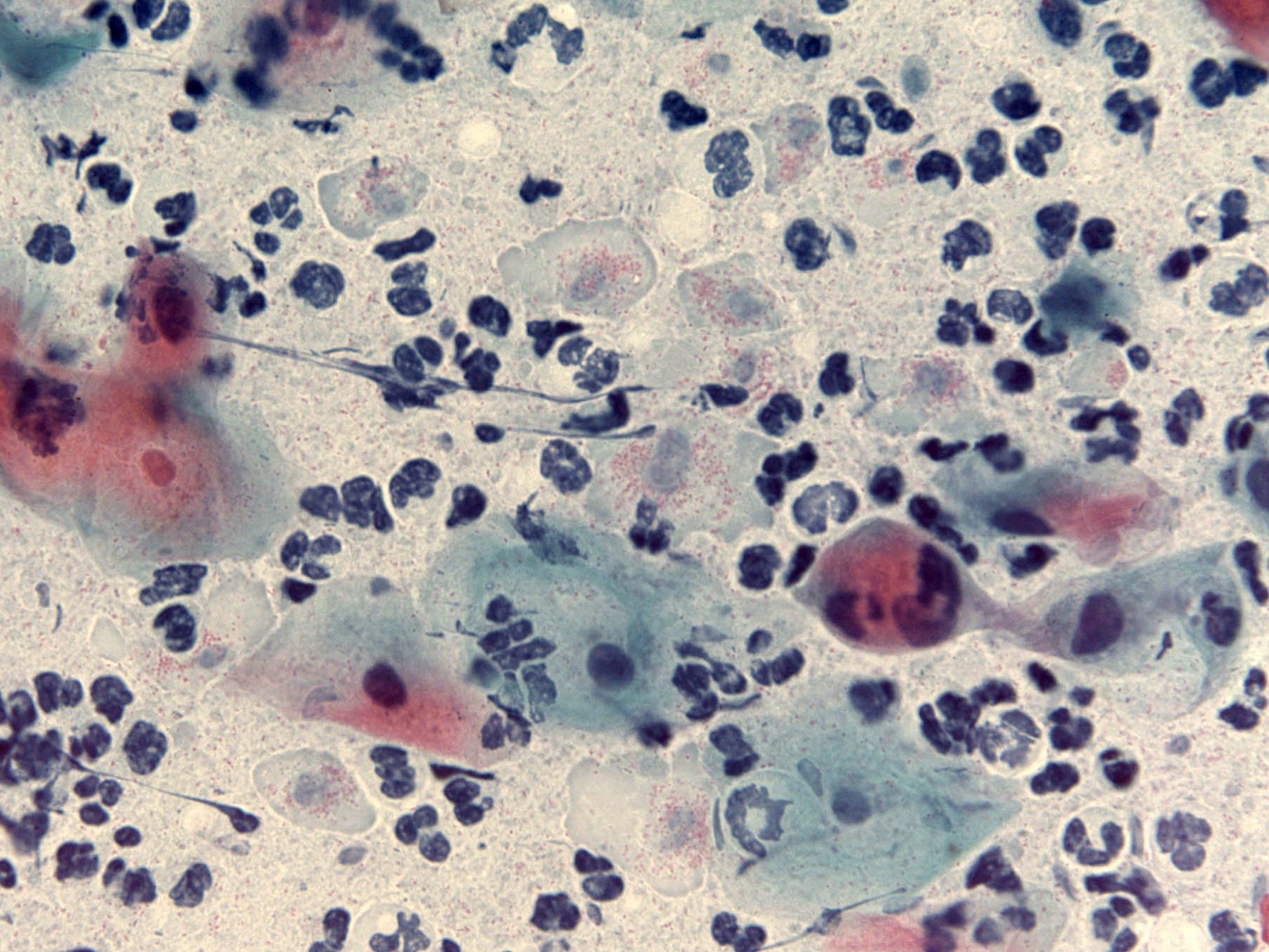 Conventional PAP smear with degenerative…
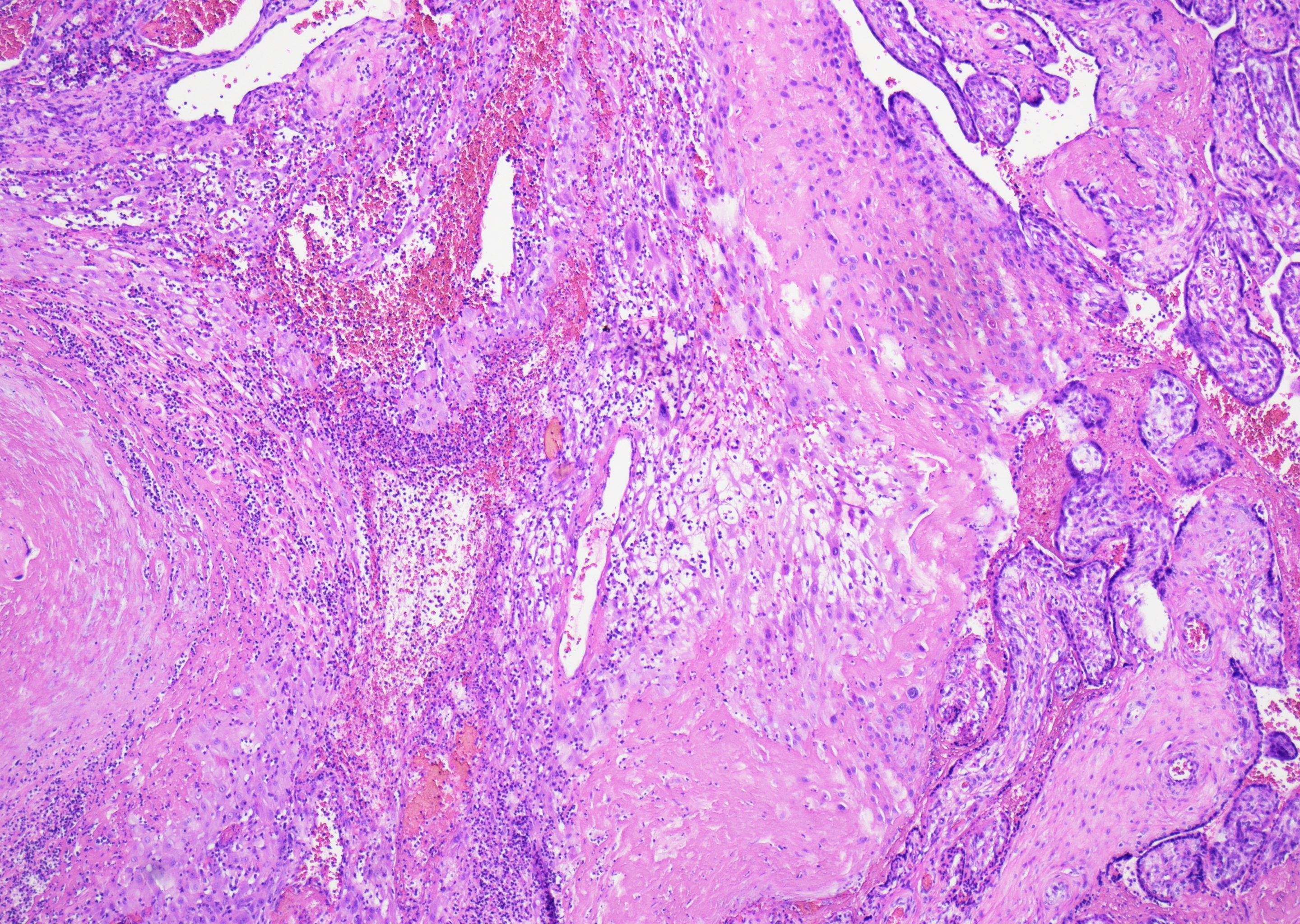 Placenta with acute inflammation and…
Morphology
Cytology:
- Trophozoites 10-20 µm in length and 7-10 µm in width, pear-shaped to ovoid, eccentrically placed nucleus, eosinophilic intracytoplasmatic granules
- Four anterior and one posterior flagella, and an undulating membrane
- Flagella can be seen on a liquid based Pap test preparation but not usually on conventional Pap smears
- On PAP smears, often degenerated forms without visible flagella and with irregular outlines are seen
- In liquid based Pap tests, the organisms may cluster on the surface of epithelial cells, so-called “Trich parties”
- Epithelial cells may show a small perinuclear clearing
- Background often with abundant neutrophils sometimes in ball-like arrangements; frequent mixed bacterial flora; small round parabasal epithelial cells may be increased
- Trichomonas can co-occur with Leptothrix spp., long filamentous bacteria, which create a “spaghetti” appearance - the field may resemble a “spaghetti and meatballs” pattern
- Rapid, jerky motility in fresh wet mounts
Histology:
- Superficial mucosal inflammation with neutrophils and microabscesses in the epithelium
- Organisms are difficult to identify and are rarely seen in routine sections
Differential Diagnosis:
- Sexually transmitted bacterial infections
- Giardiasis - anal Pap tests
Clinical notes
Transmission via sexual contact or during birth. Trichomoniasis is the most prevalent non-viral sexually transmitted disease worldwide, with humans as the only known reservoir for T. vaginalis.
In women: vaginitis with pruritus, burning, dysuria, malodorous discharge, and elevated vaginal pH; a “strawberry cervix” (petechial hemorrhages on the ectocervix) may be present.
In men: urethritis or prostatitis, mostly asymptomatic.
Associated with adverse pregnancy outcomes such as preterm birth, infertility, and increased risk of HIV transmission
Ancillary Testing
Nucleic acid amplification test (NAAT), such as PCR or TMA, from vaginal swab, cervical swab, urethral swab, or first-void urine. Wet mount from fresh vaginal fluid has low sensitivity. Antigen rapid tests can be used as an adjunct. Consider testing for co-infections, especially BV and other STIs.Additional Information
Trichomonads are often an incidental finding on cervical PAP smears.
Conventional PAP is unreliable for diagnosing T. vaginalis, so confirmation is recommended. Liquid-based cytology (LBC) is more accurate, with reported sensitivity of 60–96% and specificity of 98–100%, so treating a clear LBC-positive result without additional testing may be reasonable. In men, microscopy of urethral swabs or urine sediment is unreliable due to low organism burden.
The sexual partner should always be treated concurrently, since the likelihood of prior transmission is high, and this helps prevent a ping-pong reinfection effect.
Differential Diagnosis
References
- Hobbs MM, Seña AC. Modern diagnosis of Trichomonas vaginalis infection. Sex Transm Infect. 2013 Sep;89(6):434-8. doi: 10.1136/sextrans-2013-051057. Epub 2013 Apr 30. PMID: 23633669; PMCID: PMC3787709.
- Elshewy K. Medical Parasitology: A Body System Approach. Cham: Springer; 2024. doi: 10.1007/978-3-031-64736-9. Print ISBN: 978-3-031-64735-2.