
- EN
- DE

Bacteria
Differential Diagnosis of Klebsiella granulomatis (Granuloma inguinale, Donovanosis):
Chlamydia und Chlamydophila Species

- Organ System
- Genitourinary Tract, Lymphatic System, Respiratory Tract
- Diagnostic Method
- Cytology

- Geographical Region
- Dry Areas,
- Islands,
- Tropical and Subtropical Region,
- Polar and Subpolar Zone,
- Temperate Zone
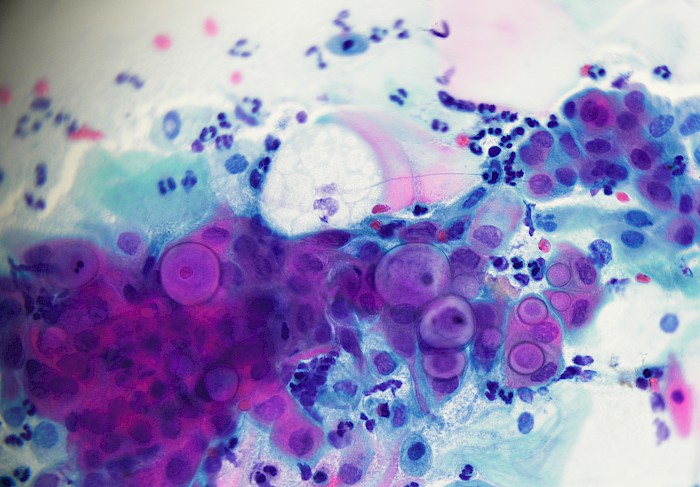
 Cervical smear, parabasal and metaplastic…
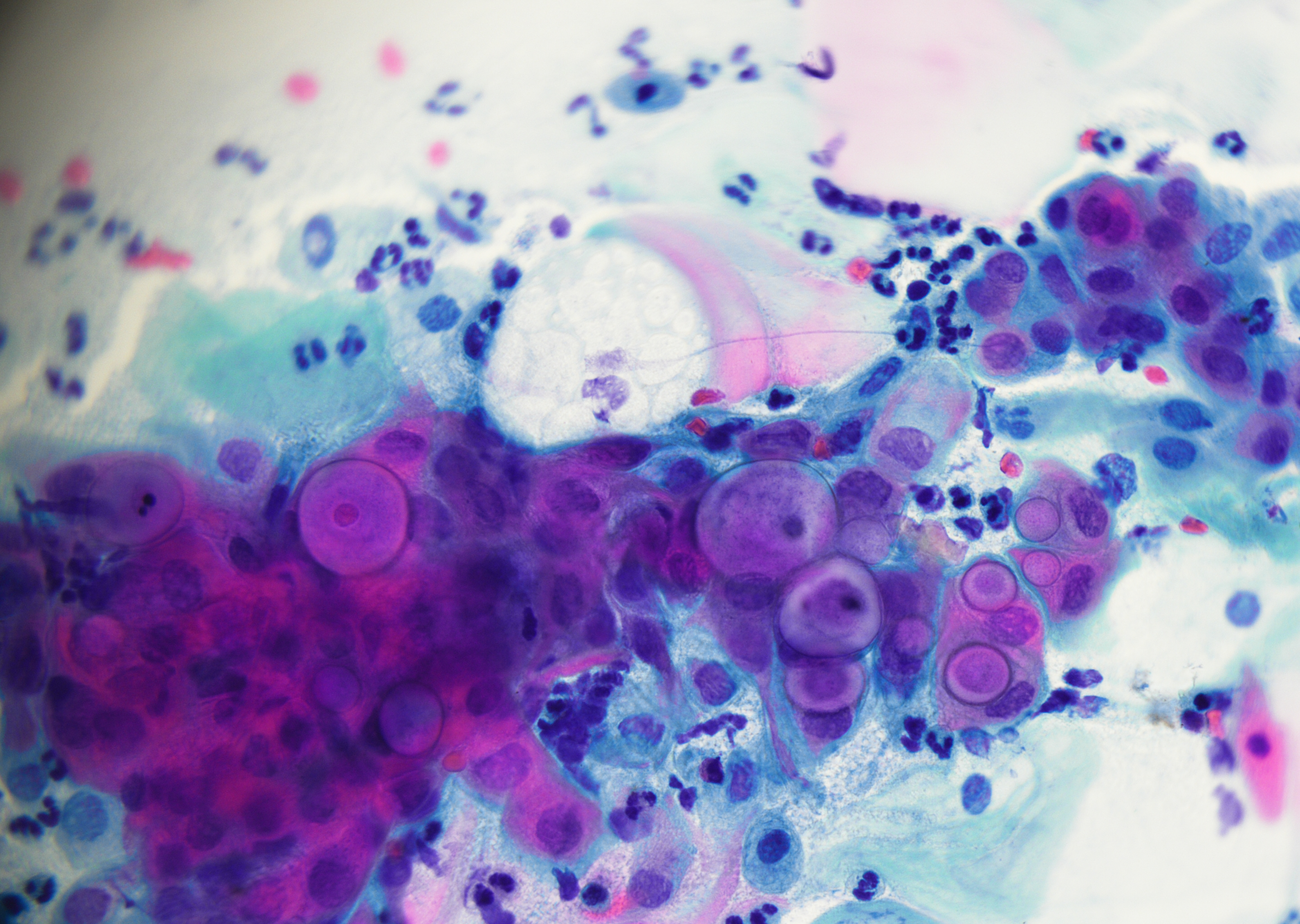
 Cervical smear, inclusion bodies have…
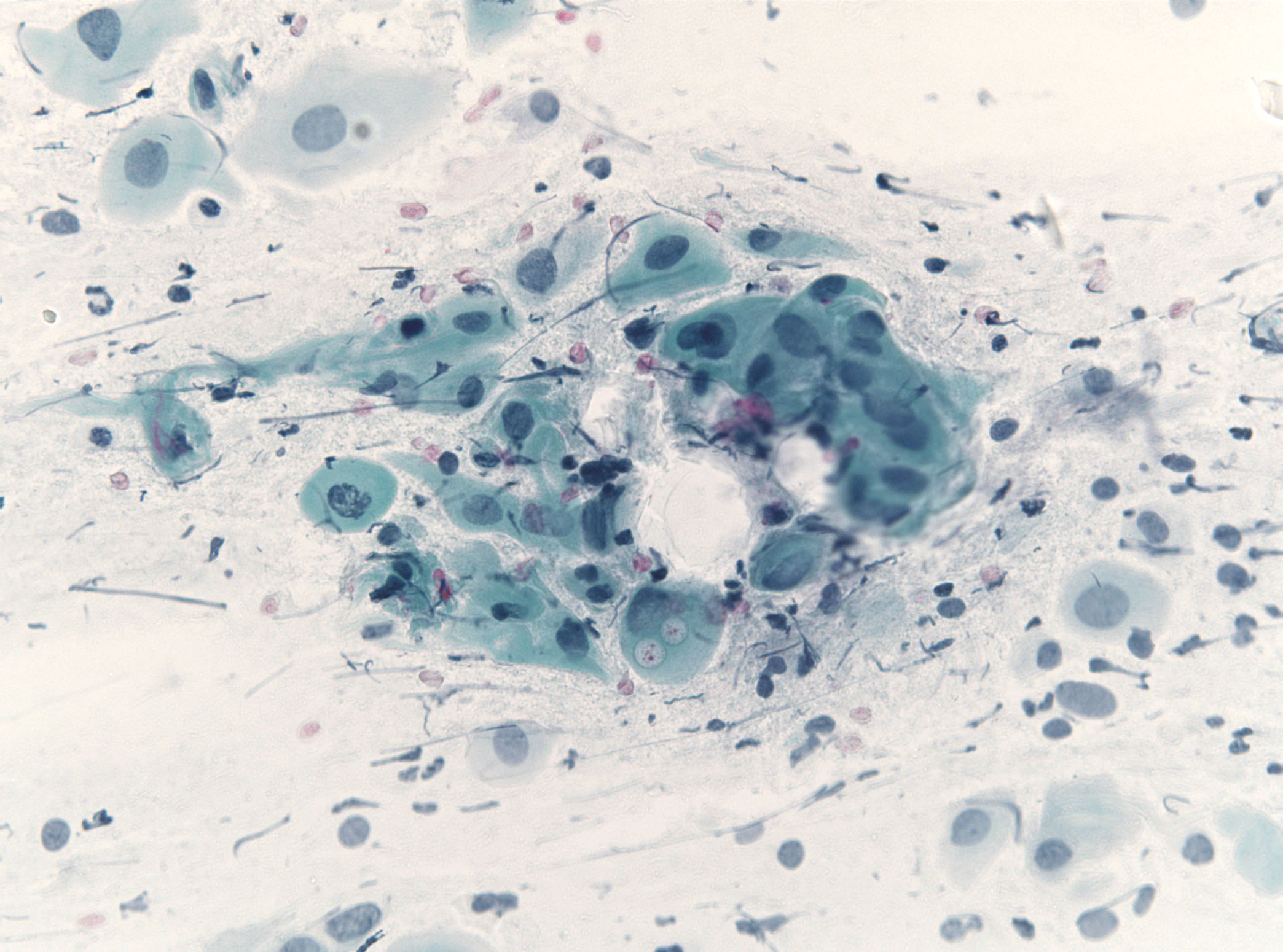 Cervical smear, inclusion bodies can also…
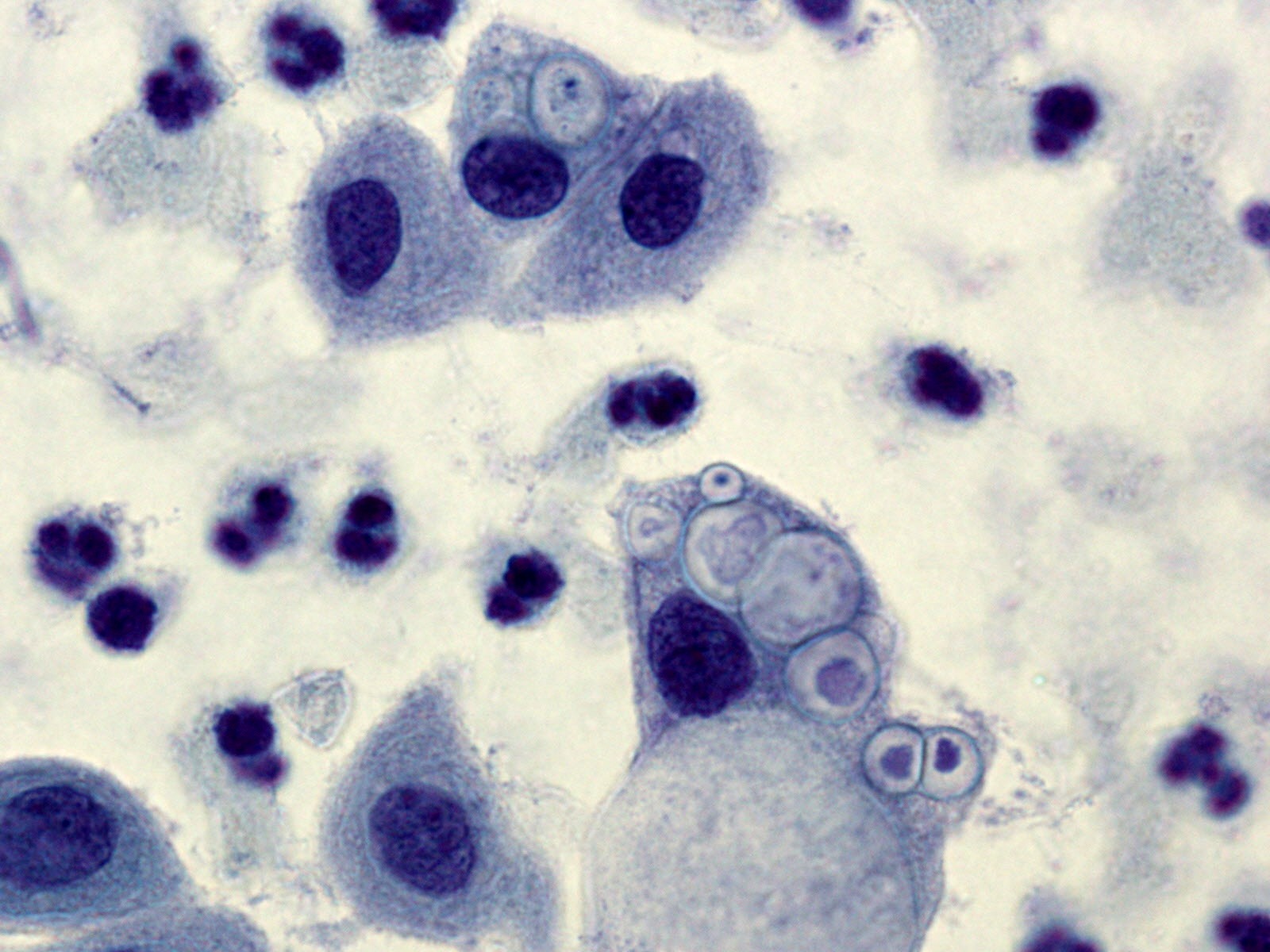
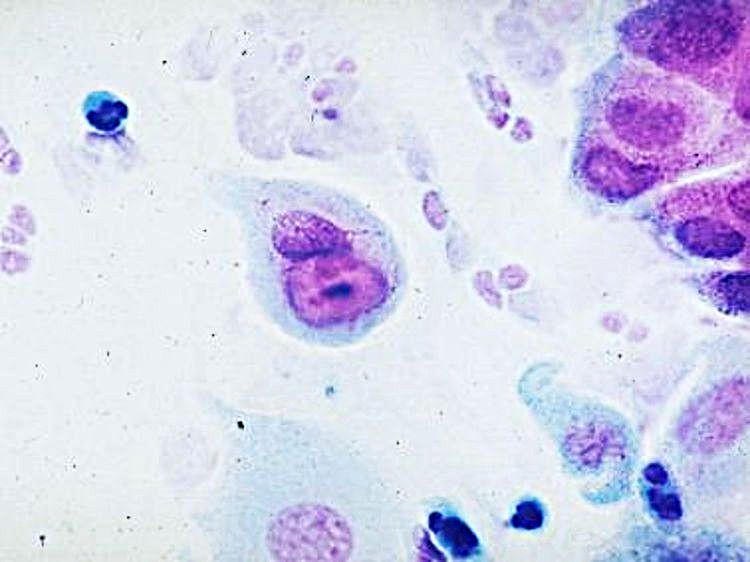 Urine, cell with an intracytoplasmic vacuole…
Morphology
Cytology:
Cytomorphology is non-specific and clues to the presence of chlamydial infection include:
- Basophilic to amphophilic granular intracytoplasmic inclusions in columnar or metaplastic infected epithelial cells
- Perinuclear halos possible
- Oft neutrophil-rich background
- In conjunctival smears, follicular response with cytoplasmic inclusions in epithelial cells.
- C. pneumoniae and C. psittaci rarely show diagnostic inclusions on routine cytology; macrophages with fine granular inclusions and neutrophil-poor interstitial pattern in lower airway samples may be helpful.
Histology:
Mild to moderate chronic active mucositis; lymphoid aggregates. In lungs, interstitial pneumonitis with mononuclear infiltrates; organisms usually not seen on HE.
Differential diagnosis:
- Reactive or metaplastic epithelial changes with cytoplasmic vacuoles
- Degenerative intracytoplasmic material or bacterial aggregates
- Fungal elements or superimposed fungal spores
Clinical notes
C. trachomatis: Commonly asymptomatic STI causing cervicitis and urethritis; ascending infection may lead to pelvic inflammatory disease and tuboovarian abscess; epididymitis in men; neonatal conjunctivitis and pneumonia. Etiologic agent of lymphogranuloma venereum (LGV) with urogenital or anorectal ulcers, regional lymphadenopathy, fever, and possible inguinal buboes if untreated. Trachoma is a chronic follicular conjunctivitis and a leading cause of preventable blindness worldwide.
C. pneumoniae: Atypical pneumonia, bronchitis, pharyngitis.
C. psittaci: Psittacosis with fever, headache, and atypical pneumonia, typically associated with bird exposure.
Ancillary Testing
NAAT from vaginal, cervical, urethral swab or first-void urine for C. trachomatis. Co-testing for N. gonorrhoeae and BV when clinically indicated. DFA or NAAT on conjunctival swabs in neonatal or trachoma settings. For lower respiratory samples, PCR for C. pneumoniae or C. psittaci. Serology can support psittacosis diagnosis when PCR is unavailable.Additional Information
Cytology is insufficient for species assignment; NAAT confirmation is required.
References
Centers for Disease Control and Prevention. (2021). Chlamydial infections. In Sexually transmitted infections treatment guidelines, 2021.
Centers for Disease Control and Prevention. (2021). Lymphogranuloma venereum (LGV). In Sexually transmitted infections treatment guidelines, 2021.
Centers for Disease Control and Prevention. (2021). Pelvic inflammatory disease (PID). In Sexually transmitted infections treatment guidelines, 2021.
Centers for Disease Control and Prevention. (2025). About Chlamydia pneumoniae infection.
Centers for Disease Control and Prevention. (2025). About psittacosis.
White, J. A., Dukers-Muijrers, N. H. T. M., Hoebe, C. J. P. A., Kenyon, C. R., Ross, J. D. C., & Unemo, M. (2025). 2025 European guideline on the management of Chlamydia trachomatis infections. International Journal of STD & AIDS.
World Health Organization. (2026). Trachoma